
Make progressmore predictable.
For the five things you've half-started and the one you're avoiding.
No account. No email. No polished goal required.
What is progress?
From where you are now, progress is any meaningful step in a direction you want to go.
What do you want to be different?
With the whole list in front of you, TPF helps you decide what matters now and which next move gives your effort the best chance to pay off.
Which target is best to start with?

1. Name your targets
Add up to five things you've half-started and the one you're avoiding.
2. Score each option
A Progress Score looks at Desire, Awareness, Resistance, and Time.

3. Choose a better next move
See which option has stronger starting conditions and why, so you can act with confidence.
Better design. Better results.
The goal stays the same. Change the starting conditions.
Before
0.14
Unlikely
Easy to forget. Hard to start.
After
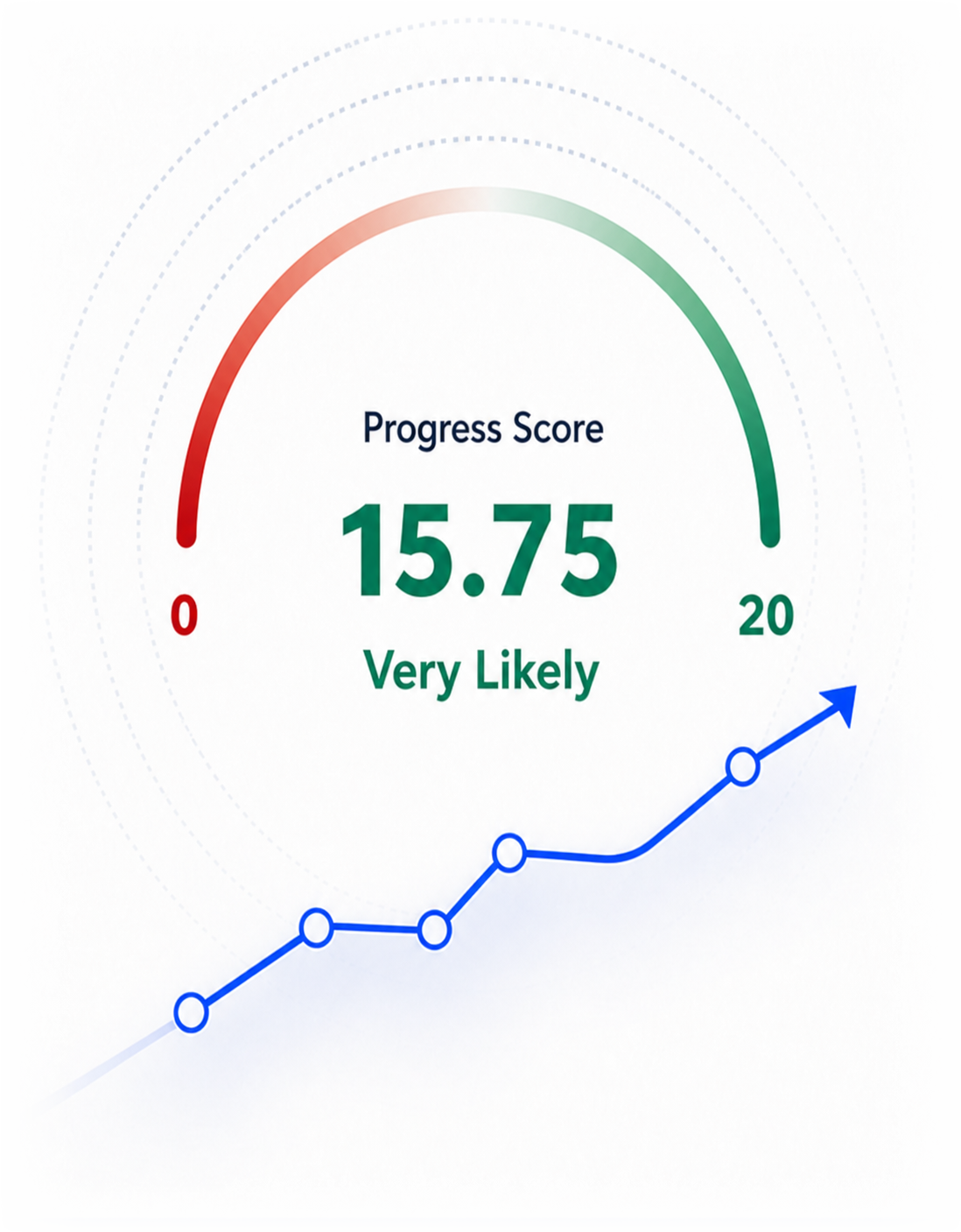
15.75
Very likely
Better starting conditions.
Why the score matters
Your Progress Score combines Desire, Awareness, Resistance, and Time. A higher score means your current design has stronger starting conditions for making progress.
Your best next move.
Tell us what's on your mind. TPF will rank what to choose next.
No account. No email. No polished goal required.